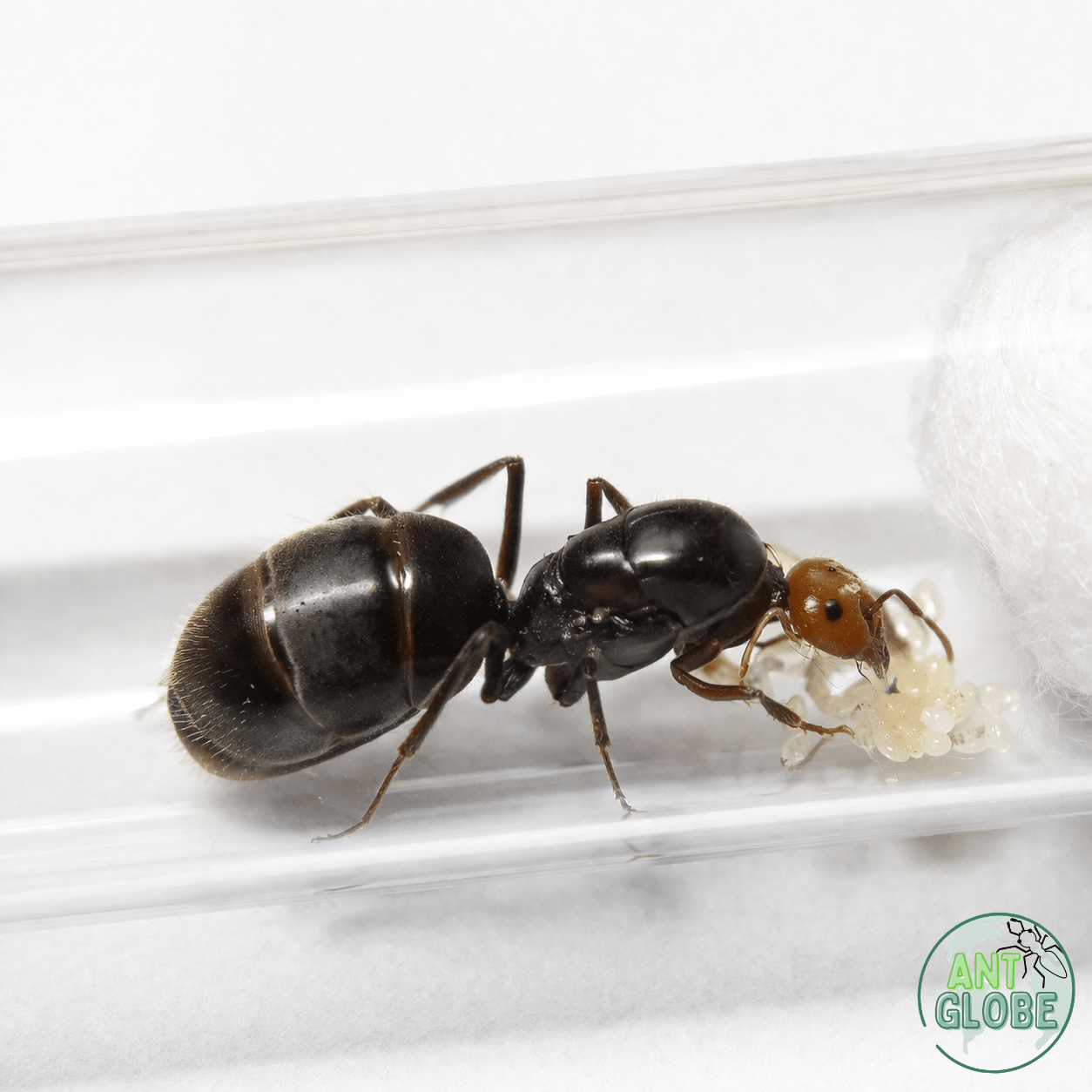
The Myrmecocystus placodops, also known as the Giant Bicolored Honeypot Ant, is a heavyweight of the North American desert. Among the honeypots, M. placodops is renowned for its sheer size and its striking “orbiculate” (rounded) heads found in larger workers. They are a diurnal (day-active) species that, in bright sunlight, appears to shimmer with a silvery or glittering white sheen. They are not just famous for their living honey jars, but also for their deep nesting engineering, with tunnels in the wild reaching over 15 feet (4.8 meters) deep!
Technical Specifications
| Feature | Details |
| Origin | Southwest USA (Texas, New Mexico, Arizona) and Northern Mexico |
| Habitat | Arid grasslands, mesquite-acacia savannas, and stony deserts |
| Colony type | Monogyne (One queen per colony) |
| Queen size | 13mm – 15mm (Large, robust, bicolored) |
| Worker size | 5mm – 10mm (Highly polymorphic with large majors) |
| Nutrition | High sugar requirement and insect protein (scavengers/predators) |
| Humidity | Nest: 50% – 70% | Outworld: 20% – 40% (Arid/Dry) |
| Temperature | Nest: 26°C – 30°C | Outworld: 25°C – 35°C (Heat-loving) |
| Hibernation | Facultative (Optional winter rest at ~15°C) |
| Difficulty | 4/5 (Requires heat and vertical replete space) |



Reviews
There are no reviews yet.