
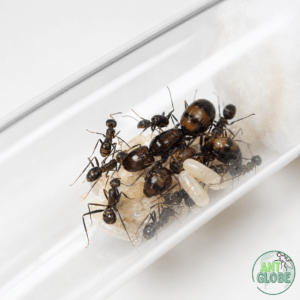
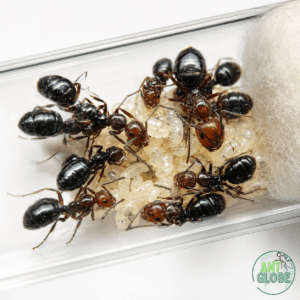
The Myrmecocystus mimicus, often called the False Honeypot Ant (though it is a true honeypot ant), is one of the most famous and widely studied species of the genus. While its cousin M. mexicanus is a golden, nocturnal giant, M. mimicus is a diurnal (day-active) warrior of the desert. They are known for their striking bicoloration—a deep reddish-brown head and thorax paired with a dark, often black, abdomen. They are legendary not just for their honey-filled repletes, but for their complex social “tournaments,” where neighboring colonies engage in non-lethal displays of strength to settle territorial disputes.
Technical Specifications
| Feature | Details |
| Origin | Southwestern USA (AZ, NM, TX, CA, NV) and Northern Mexico |
| Habitat | Arid grasslands, desert plains, and scrublands |
| Colony type | Monogyne (One queen per colony) |
| Queen size | 12mm – 15mm (Reddish-brown with a large, dark gaster) |
| Worker size | 4mm – 8mm (Bicoloured: Red/Brown and Black) |
| Nutrition | High sugar requirement (Nectar/Honey) and insect protein |
| Humidity | Nest: 50% – 70% | Outworld: 30% – 50% |
| Temperature | Nest: 26°C – 30°C | Outworld: 25°C – 35°C (Enjoys heat) |
| Hibernation | Short winter rest (Dec to Feb at ~15°C) |
| Difficulty | 4/5 (Requires heat and vertical space for repletes) |

Reviews
There are no reviews yet.