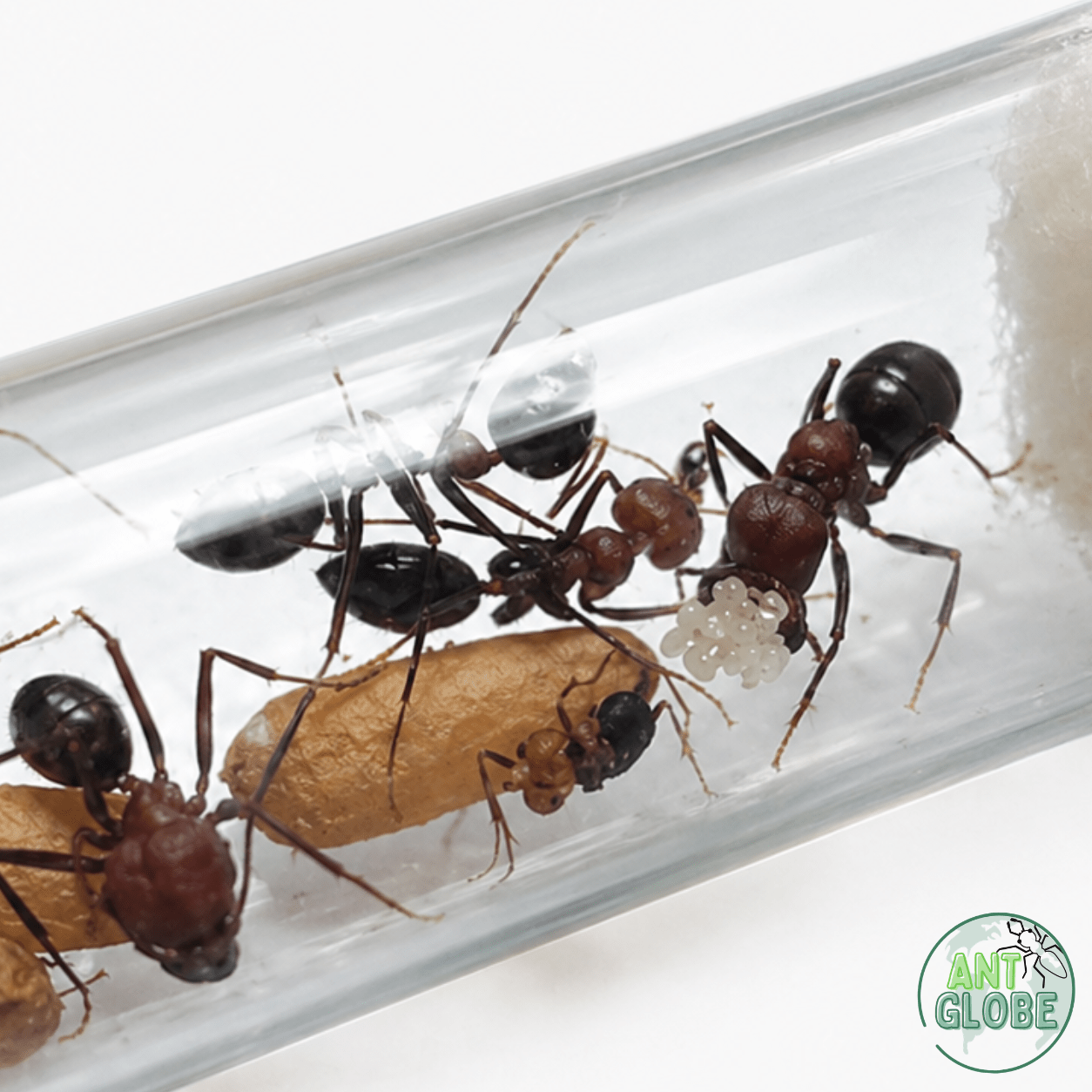
The Cataglyphis nodus, often referred to as the “Desert Runner” or “Great Desert Ant,” is a true marvel of the Mediterranean and Middle Eastern landscapes. These ants are built for the extreme heat of high noon. They are characterized by their long legs, matte-black bodies, and a distinctive way of running with their abdomens curled upward (an “alkali” posture) to protect themselves from the heat radiating off the sand. They are highly visual, intelligent, and possess an incredible internal navigation system that makes them one of the most fascinating species to observe in a large setup.
| Feature | Details |
| Origin | Southeast Europe, Middle East, and North Africa |
| Habitat | Arid steppes, sandy deserts, and sun-drenched plains |
| Colony type | Monogyne or Polygyne (depending on the region) |
| Queen size | 12mm – 15mm |
| Worker size | 5mm – 13mm (Highly polymorphic) |
| Nutrition | Honey water/sugary liquids and plenty of insects |
| Humidity | 30% – 50% (Keep the nest mostly dry; outworld very dry) |
| Temperature | 24°C – 30°C (Requires a hot basking spot up to 40°C) |
| Hibernation | November to March at 15°C (A light “diapause”) |
| Difficulty | 3.5/5 |


Reviews
There are no reviews yet.