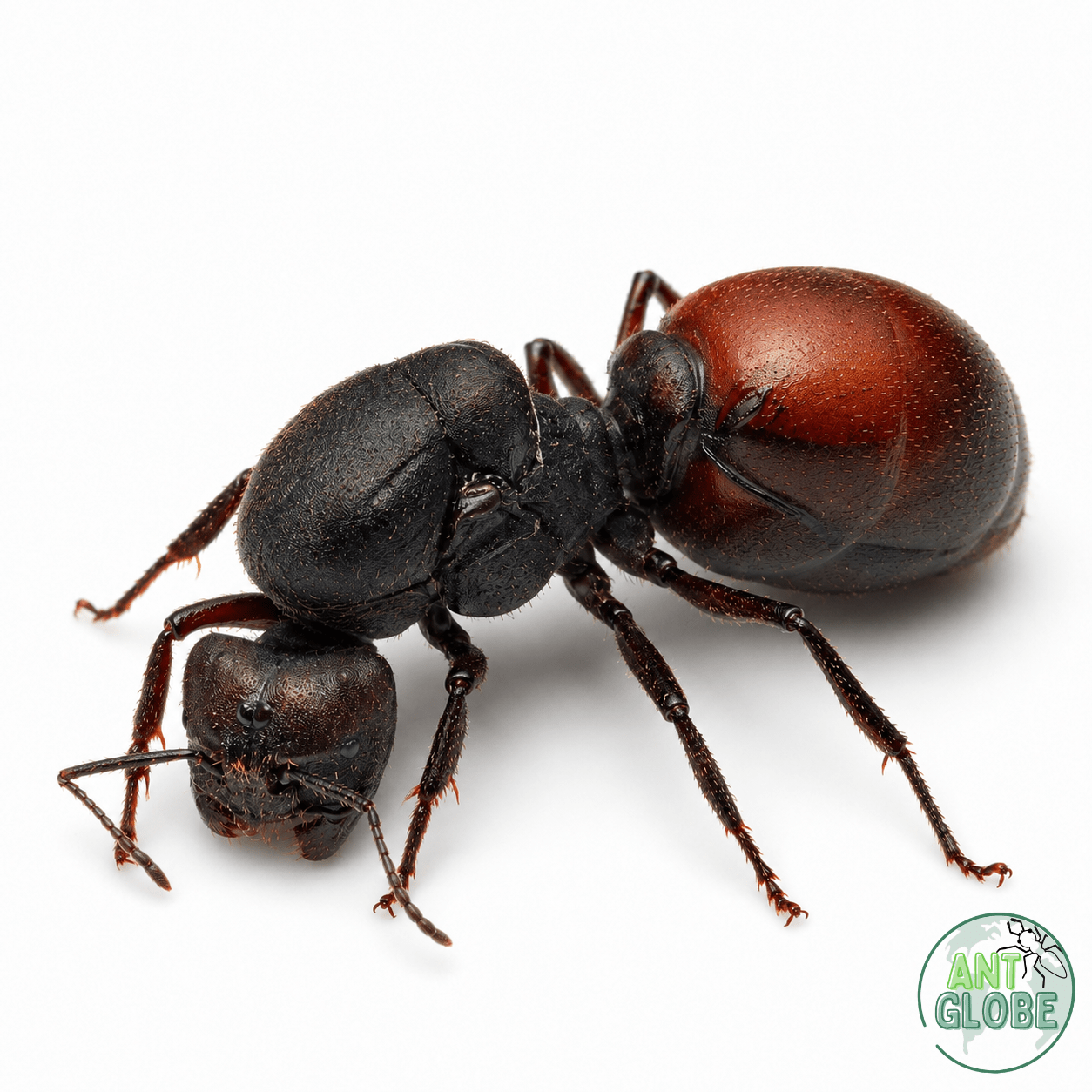
The Atta bisphaerica, commonly known as the Grass-Cutting Ant or “Saúva Mata-Pasto” in Brazil, is a specialized titan of the South American savannas. While most leafcutters are generalists that prefer broad-leafed plants (dicots), A. bisphaerica is a strict monocot specialist. They are the primary architects of the Brazilian Cerrado, evolved specifically to harvest and process tough, fibrous grasses and sugarcane.
Technical Specifications
| Feature | Details |
| Origin | Brazil (Specifically the Southeast and Cerrado biomes) |
| Habitat | Grasslands, savannas, and sugarcane plantations |
| Colony type | Monogyne (Single queen; adult nests can have millions of workers) |
| Queen size | 25mm – 28mm (Deep reddish-brown to black; robust) |
| Major (Soldier) size | 14mm – 16mm (Large, powerful heads; highly aggressive) |
| Worker size | 3mm – 12mm (Highly polymorphic; adapted for grass-hauling) |
| Nutrition | Specialized fungus fed exclusively on grasses (Sugarcane, corn, jaraguá) |
| Humidity | Nest: 90% – 98% (Critical) | Arena: 40% – 60% |
| Temperature | Nest: 24°C – 26°C (Extremely stable) | Arena: 22°C – 30°C |
| Hibernation | None (Tropical/Subtropical; active year-round) |
| Difficulty | 5/5 (Expert; notoriously difficult to maintain due to diet) |

Reviews
There are no reviews yet.