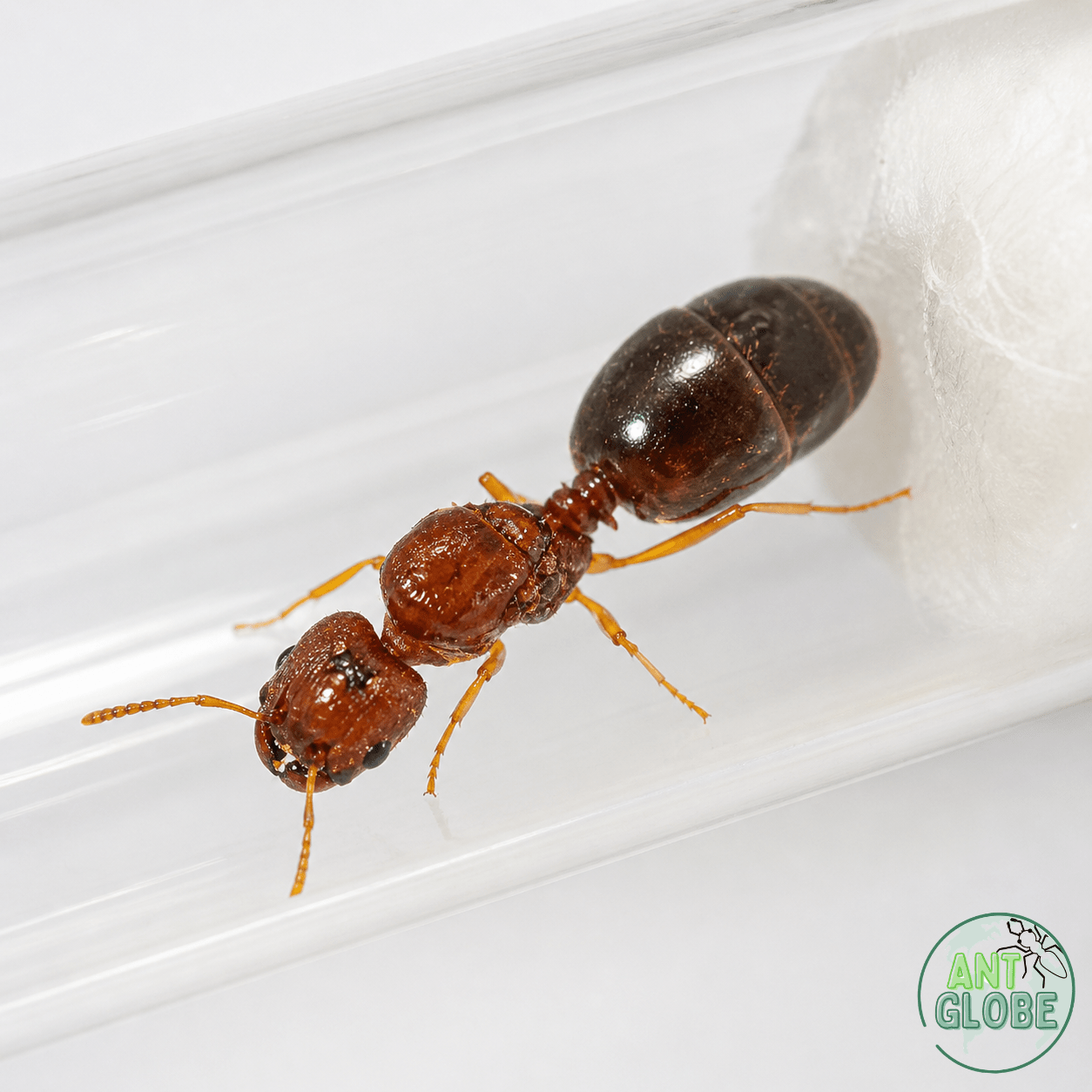
The Pheidole parva, aptly known as the Tiny Big headed Ant, is the “miniature powerhouse” of the genus. While most Pheidole aim for size, P. parva thrives on being inconspicuous yet incredibly efficient. Native to South and Southeast Asia, this species is a “tramp ant” it is a master of hitching rides on human commerce and has established itself as a common (though usually harmless) presence in gardens and households across the tropics. For a keeper, they offer the classic big headed experience in a microscopic, high density package.
Technical Specifications
| Feature | Details |
| Origin | Indomalaya (South/Southeast Asia); now widespread in Old World tropics |
| Habitat | Disturbed lands, gardens, leaf litter, and urban environments |
| Colony type | Mostly Monogyne, but can be Polygyne in established nests |
| Queen size | 4mm – 5mm (Very small for a Pheidole queen) |
| Major (Soldier) size | 3mm (Boxy, rectangular heads relative to body) |
| Minor (Worker) size | 1mm – 2mm (Tiny, slender, and fast) |
| Nutrition | Opportunistic scavengers: Proteins (insects), lipids, and sugars |
| Humidity | Nest: 60% – 80% (Requires stable moisture) |
| Temperature | 24°C – 29°C (Likes tropical warmth) |
| Hibernation | None required |
| Difficulty | 3/5 (The “Micro-Escape” challenge) |
Reviews
There are no reviews yet.