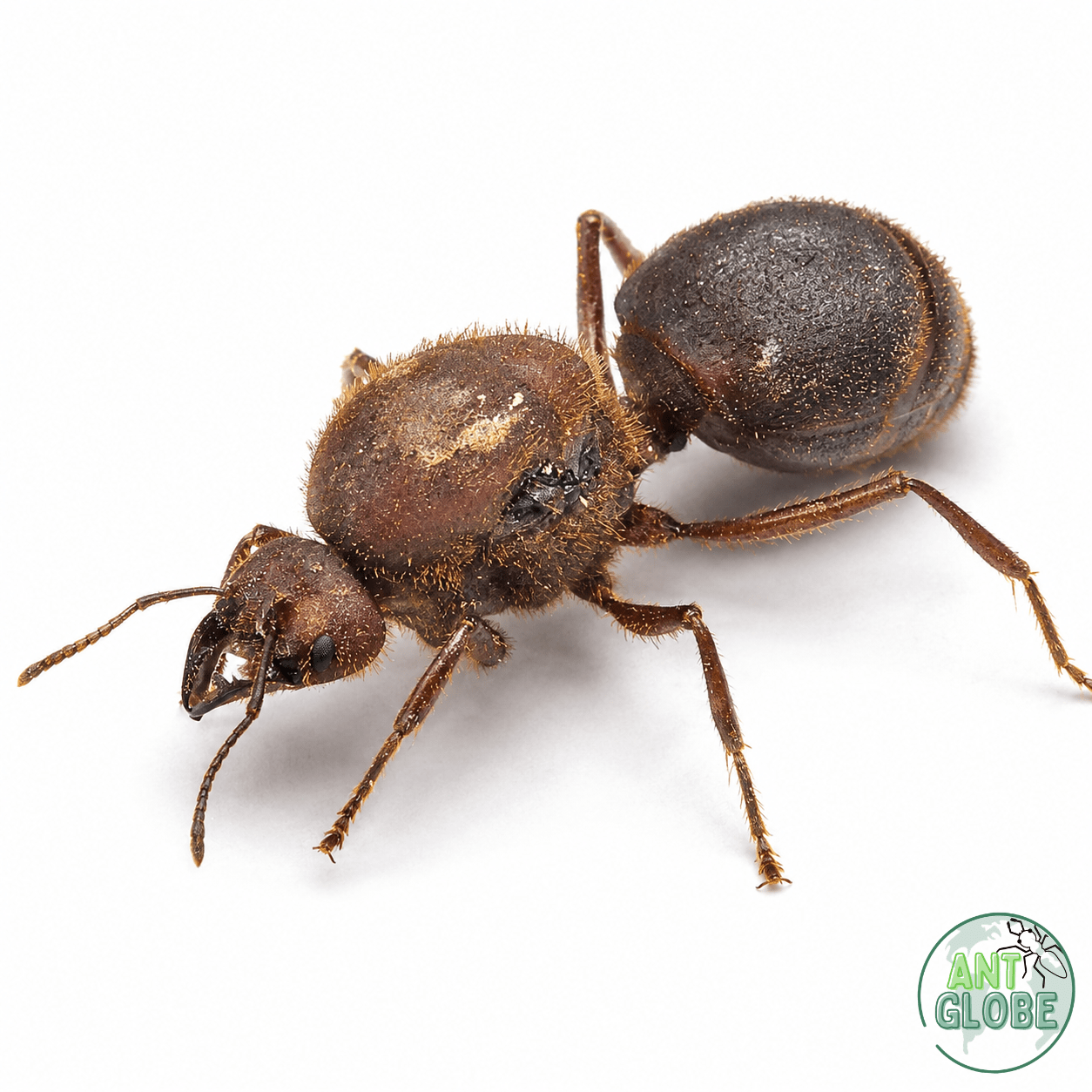
The Atta mexicana, or the Mexican Leafcutter Ant, is often considered the “industrial titan” of the desert and highland regions of Mexico and the Southwestern United States. While very similar to its rainforest cousin Atta cephalotes, the mexicana is slightly more robust and is widely regarded by experienced keepers as the most “beginner-accessible” of the Atta genus though it still remains an strictly expert level species due to its complex fungal farming.
Technical Specifications
| Feature | Details |
| Origin | Mexico, Arizona, and parts of Central America |
| Habitat | Arid grasslands, pine-oak forests, and urban areas |
| Colony type | Monogyne (Single queen; long-lived) |
| Queen size | 28mm – 31mm (One of the largest ant queens in existence) |
| Major size | 18mm – 23mm (Massive heads, powerful “wire-cutter” mandibles) |
| Worker size | 3mm – 16mm (Highly polymorphic castes) |
| Nutrition | Symbiotic fungus (Leucoagaricus gongylophorus) fed by leaves |
| Humidity | Nest: 95% – 99% (Critical) | Arena: 50% – 70% |
| Temperature | Nest: 23°C – 26°C (Extremely stable) | Arena: 21°C – 28°C |
| Hibernation | None (Tropical/Arid origin; active year-round) |
| Difficulty | 4.5/5 (Expert; slightly hardier than A. cephalotes) |



Reviews
There are no reviews yet.