How Fast Do Ants Grow?
If you are thinking about keeping ants, you have probably wondered how quickly a small colony can turn into hundreds or even thousands of workers. The answer varies a lot between species, but one thing is almost always true: ant colonies grow slowly at first and become faster as they get established.
Ants develop through four stages: egg, larva, pupa and adult. Depending on the species and conditions, an individual worker can take several weeks or several months to develop. Temperature has a particularly strong influence on brood development. (ScienceDirect)
How Long Does It Take for an Ant to Grow?
The first stage is the egg. It then develops into a larva, which is fed and cared for by workers. After that comes the pupal stage before the adult worker emerges.
For some species, development from egg to adult can take around 4–8 weeks under suitable conditions, while other species take considerably longer. Research on different ants shows just how much this can vary between species and temperatures.
This is why you should never compare the growth of two colonies simply by looking at how many workers they have.
How Fast Does an Ant Colony Grow?
A new colony usually starts with a single queen and her first brood. During this founding stage, progress can seem incredibly slow.
Once the first workers arrive, things change. The workers take over jobs such as feeding larvae, looking after the queen and collecting food. This allows the queen to concentrate more on laying eggs, so the colony can gradually increase its rate of growth. (UC IPM)
This creates a noticeable difference between a colony with five workers and one with fifty. More workers mean more help raising brood and collecting resources.
How Quickly Can a Colony Reach 100 Workers?
There is no universal answer.
Some species can reach 100 workers relatively quickly under good conditions, while slower species may take much longer. The queen’s productivity, temperature, food availability and the species’ natural growth rate all matter.
For a beginner, it is better to think in terms of months rather than days.
A colony that starts with a queen and eventually reaches 100 workers has already gone through many individual brood cycles. If your colony appears to be growing slowly during its first few months, that does not necessarily mean there is a problem.
Which Ant Species Grow Fast?
This depends heavily on the species.
Lasius niger is a popular European beginner species and can develop into large colonies. Messor barbarus generally develops more moderately, particularly during the early founding stage. Some Camponotus species are slower still.
That difference can actually be useful when choosing your first colony.
If you want a colony that develops quickly and becomes highly active, a faster growing species may be more appealing. If you prefer a slower hobby that gives you more time to keep up with the colony, a slower growing species can be a better choice.
What Makes Ant Colonies Grow Faster?
Temperature
Temperature can have a major effect on development. Warmer conditions within the species’ suitable range generally speed up brood development, while colder temperatures slow it down. Research on ant species has repeatedly demonstrated this relationship. (PubMed Central (PMC))
However, warmer does not always mean better. Every species has its own preferred conditions, and overheating a colony can be dangerous.
Food
A colony needs enough nutrition to produce and raise brood. The exact diet depends on the species, with some relying heavily on seeds and others requiring carbohydrates and protein.
Queen Health
The queen is the main source of new workers in a typical colony. If she is healthy and actively producing eggs, the colony has a much better chance of growing steadily.
Season
For many European species, growth is not constant throughout the year. Winter coldness can significantly reduce brood production and colony activity.
Why Is My Ant Colony Growing Slowly?
Slow growth is not automatically a sign that something is wrong.
Your colony could simply be young, the species could naturally develop slowly, or the ants could be entering a seasonal period of reduced activity.
It is also worth remembering that brood is not always visible. Eggs and larvae may be hidden deeper inside the nest, so judging a colony only by the number of workers you can see can be misleading.
Instead of checking the worker count every few days, look for changes over several weeks. Are there new eggs? More larvae? New pupae? More workers appearing?
Those are much better indicators of steady development.
Should You Try to Make Your Ants Grow Faster?
Probably not.
It is tempting to increase the temperature, feed more often or move the colony into a larger nest because you want to see faster growth. But pushing a colony is not the same as providing good husbandry.
The goal should be to give the ants stable, species appropriate conditions and let them develop naturally.
Some colonies simply grow faster than others. That is part of keeping living animals.
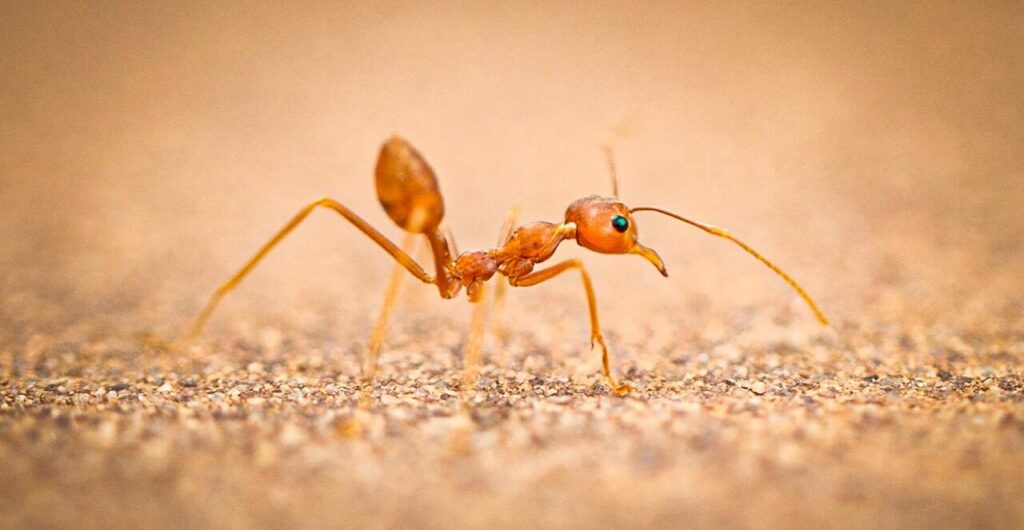
How Long Until an Ant Colony Becomes Large?
For many species, reaching hundreds of workers can take months or longer, while reaching thousands may take years.
There is no standard timeline because mature colony size and growth rate differ enormously between species. Some ants naturally maintain relatively small colonies, while others can eventually contain many thousands or more. (UC IPM)
So don’t buy your first colony expecting it to fill a formicarium within a few months.
Give it time.
Final Thoughts
Ant colony growth is a slow process at the beginning, but it can become surprisingly impressive once the colony gets established.
A queen produces the first workers, those workers take over much of the colony’s work, and the growing workforce allows the colony to raise even more brood.
Choose a species that matches your patience, provide the right conditions and give the colony time.
Watching a colony develop from a single queen into hundreds or thousands of ants is one of the best parts of ant keeping.